

Top Mountain Biking Trails in Aspen
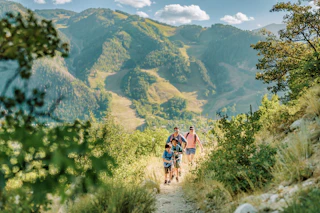
Designated as a Gold-Level Ride Center by the International Mountain Bicycling Association, the Roaring Fork Valley is home to outstanding mountain biking.
Ranging from mild-mannered and smooth to rocky and technical, our local trails offer terrain for a range of abilities. Check out our guide to mountain biking in Aspen and Snowmass to discover our top picks for mountain biking trails, learn about our IMBA designation, and stay safe on the trails.


- Lowline trail. The Lowline Trail runs below the Highline Trail and a loop can be created between the two trails. This is a singletrack trail with an easy flow but with a few narrow sections that may require technical bike placement or bike dismount. For more information visit Bike Snowmass online here.
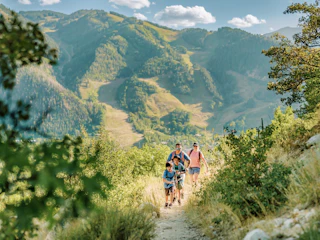
- Sky Mountain Park is a 2,500 acre area with a network of trails that connect Aspen and Snowmass Village. This intermediate ride boasts wonderful views of Aspen, Snowmass, Independence Pass, Mount Sopris, and Basalt Mountain.
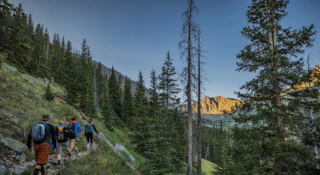
- Government Trail. This difficult trail packs enough punch to please even the most accomplished mountain biker. It begins with a challenging climb up Snowmass Ski Area and then traverses across ski runs and through dense evergreens to the Buttermilk Ski Area. Here, the trail roller-coasters through aspen groves and thrilling single-track, ending just outside of Aspen.
- Smuggler-Hunter Creek Loop. Aspen’s classic intermediate-to-advanced ride, this trail begins with the steep Smuggler Mountain Road — a 1.5-mile climb guaranteed to get your heart pumping. It winds into the beautiful Hunter Creek Valley, passing over a smooth single-track, through vast aspen groves, and past the ruins of a few deserted mining cabins.
- Winding from the top of the Elk Camp Chairlift all the way to Snowmass Base Village, Snowmass Bike Park offers something for every level of downhill mountain bike rider. With nearly 3,000 vertical feet of purpose-built downhill trails, Snowmass Bike Park delivers all your favorite aspects of a winter ski experience, without the snow. Come cruise through the forests and meadows and see for yourself.

What is an IMBA Gold-Level Ride Center?
From Aspen’s Hunter Creek Valley, to Sky Mountain Park single track between Aspen and Snowmass Village, to the Rio Grande Trail connecting the entire valley, to lift-served trails on Snowmass, the Roaring Fork Valley reigns as one of America’s top mountain biking destinations. The IMBA Gold-Level award distinguishes Aspen and the Roaring Fork Valley as an iconic mountain biking destination, and the destination represents the pinnacle of mountain biking communities.
Aspen and the Roaring Fork Valley are the first destination in Colorado to receive the designation as an IMBA Gold Ride Center from the International Mountain Biking Association (IMBA). The IMBA Gold-Level evaluation criteria is comprised of key aspects that make for an amazing mountain bike destination and include variety of trail types, overall trail mileage, quality of trail experiences, destination best practices, and local services. The Roaring Fork Valley’s system of trails scored high marks in each of these categories, contributing to the IMBA Gold-Level designation.
5 Biking Etiquette Tips
Community-powered, local nonprofit, Aspen Cycling Club, has been bringing low-cost, weekly road and mountain bike races to the Roaring Fork Valley since 1988. The ACC also offers free skills clinics, mechanics workshops, trail work days, group rides and youth cycling scholarships. Sixteen races from May-September offer various levels of competition depending on experience level, and all of them take place on the most iconic trails and roads in the Valley. Below, they share a few important biking etiquette tips for the trails:
- Don’t mountain bike with earbuds in both ears. If you have music or a podcast on, it’s impossible to hear someone riding up behind you who may want to pass. The same can be said for riding on the road -- make sure you can hear cars or other cyclists. Plus, riding is better when you can hear the birds chirping and Aspen leaves rustling.
- When mountain biking and going downhill approach every blind corner like you “know” someone is around the corner coming up at you. That doesn’t mean you have to go super slow around every corner - but go at a speed that you could stop or avoid that person.
- I’ve recently put friendly sounding bike bells on my road and mountain bikes. Pedestrians seem to prefer this to the sound of my voice yelling that I’m “On the Left!” I usually get a friendly smile and wave and I believe this improves the cyclist-pedestrian relationship. Additionally, I’ve attached a Timber Bike Bell and I activate it on my MTB descents. It automatically rings when I bounce down the trail and helps to alert uphill riders that I’m coming before I can see them. Bring plenty of water to avoid dehydration, bring warm clothes and a rain jacket to avoid hypothermia on a chilly decent, bring a tire repair kit to avoid getting stuck away from help, bring some food or gels to avoiding bonking (not enough energy to get home), and if you are riding solo always tell your significant other where you are going and when to expect your return home.
- Ride dirt not mud! Aspen’s dry dirt is particularly sensitive to wet conditions, and the trails will rapidly degrade if people ride them in the wet. So wait till things dry out or plan your rides for the morning to avoid those afternoon thunderstorms.
- When passing hikers, pedestrians, or other cyclists, call out the number of riders behind you. For example, Two more!, Last one!, or Just me! if you’re riding alone. This helps others know to expect more riders and avoid collisions on the trail.

Everything You Need to Know About Aspen’s IMBA Gold-Level Ride Center Status
In early 2020, Colorado’s Roaring Fork Valley (home of Aspen, Basalt, Carbondale, Glenwood Springs, & Snowmass Village) was designated a Gold-Level Ride Center by the International Mountain Bicycling Association. This marks the first Gold Level Ride Center and First Gold-Level IMBA Ride Center™ in Colorado, and fifth in United States. Here’s everything you need to know about our designated Gold-Level status.
What is IMBA?
IMBA is the International Mountain Biking Association that educates and awards the pinnacle of mountain biking communities based on the extensive variety of high-quality rides, and fun beyond the trails. IMBA recognizes outstanding destination-worthy mountain bike trail communities as Ride Centers™ and adventurous backcountry trails as IMBA EPICS. The goal of the program is to inspire, inform and engage local stakeholders so that mountain bikers can have more great places to ride.

What criteria is required to be designated as a Gold-Level Ride Center?
The IMBA Gold-Level evaluation criteria is comprised of key aspects that make for an amazing mountain bike destination and include variety of trail types, overall trail mileage, quality of trail experiences, destination best practices, and local services. The Roaring Fork Valley’s system of trails scored high marks in each of these categories, contributing to the IMBA Gold-Level designation.
Aspen as an iconic mountain biking destination.
From Aspen’s Hunter Creek Valley, to Sky Mountain Park single track between Aspen and Snowmass Village, to the Rio Grande Trail connecting the entire valley, to lift-served trails on Snowmass, the Roaring Fork Valley reigns as one of America’s top mountain biking destinations. With more than 300 miles of high quality single-track to explore, the Roaring Fork Valley provides an incredible breadth of experiences for both local and visiting riders seeking beauty and exhilaration.
How do the trails connect throughout the Roaring Fork Valley?
The Roaring Fork Valley offers incredibly convenient and connected access between the five communities (Aspen, Basalt, Carbondale, Glenwood Springs, & Snowmass Village). The Rio Grande Trail is a surfaced pathway that connects trail users from Glenwood Springs, through Carbondale, Basalt, all the way to Aspen, 42 miles away. As riders traverse the Rio Grande Trail, they can choose from over 300 miles of easily accessed scenic terrain, from mountainous slopes and peaks, down to the valley floor. Favorite rides near Aspen and Snowmass Village include classics like the Government and Sunnyside Trails, with newer trails at Sky Mountain Park offering a way to link the upper valley trails together into loops ranging from an hour or two, to all-day adventures. While Snowmass offers beauty and challenge in all directions, the Snowmass Bike Park’s gondola and chairlift deliver riders above 11,000’, and offer descents of over 3,000’ to arrive back at Snowmass Town Park. Exploring the middle of the valley in Basalt and Carbondale, riders can find red rock terrain and desert cactus at Red Hill, or endless aspen tree groves and massive views of the Elk Mountains range on the Hay Park Trail. Red Mountain, one of Glenwood Springs’ new favorite trail systems, includes the Grandstaff Trail where grand views of Mount Sopris meet fun flow, big vertical drops, and optional airtime.
What can you do post-ride?
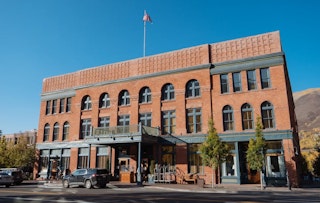
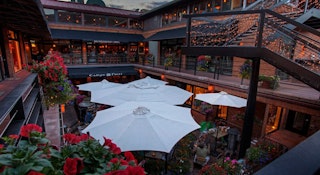
The Roaring Fork Valley is home to more than 10 bikes shops that are recognized for quality service and product, and some of the best restaurants, bars, and post-ride hangouts in the state. After a post-ride drink, enjoy an evening at one of the Valley’s world class lodging options, or visit on of the many spa options located in Aspen. For a post-ride meal, the options are endless with over 80 eateries in Aspen alone that range from Mexican to BBQ to farm-to-fork freshness, and more. Close out the day with a sunset ride on the trail, followed by an evening with live music, local beer and a dance party with the locals.
Explore more of our favorite mountain bike trails in Aspen here.
For more information, please visit RFMBA.org/Ride-Center. Watch the video here.
Tag us on social @AspenCo in your best biking pictures to be featured on our website and social channels! Sign up for our monthly destination newsletter for more tips.